


Your Premier Guide to Hiring & Becoming a Medical Front Desk Receptionist
Discover the pivotal role, essential skills, and expert strategies for securing or recruiting top-tier talent in this critical healthcare position. Streamline your clinic's first impression and operational efficiency.
The Complete Medical Receptionist Profile
The Heartbeat of Healthcare Administration
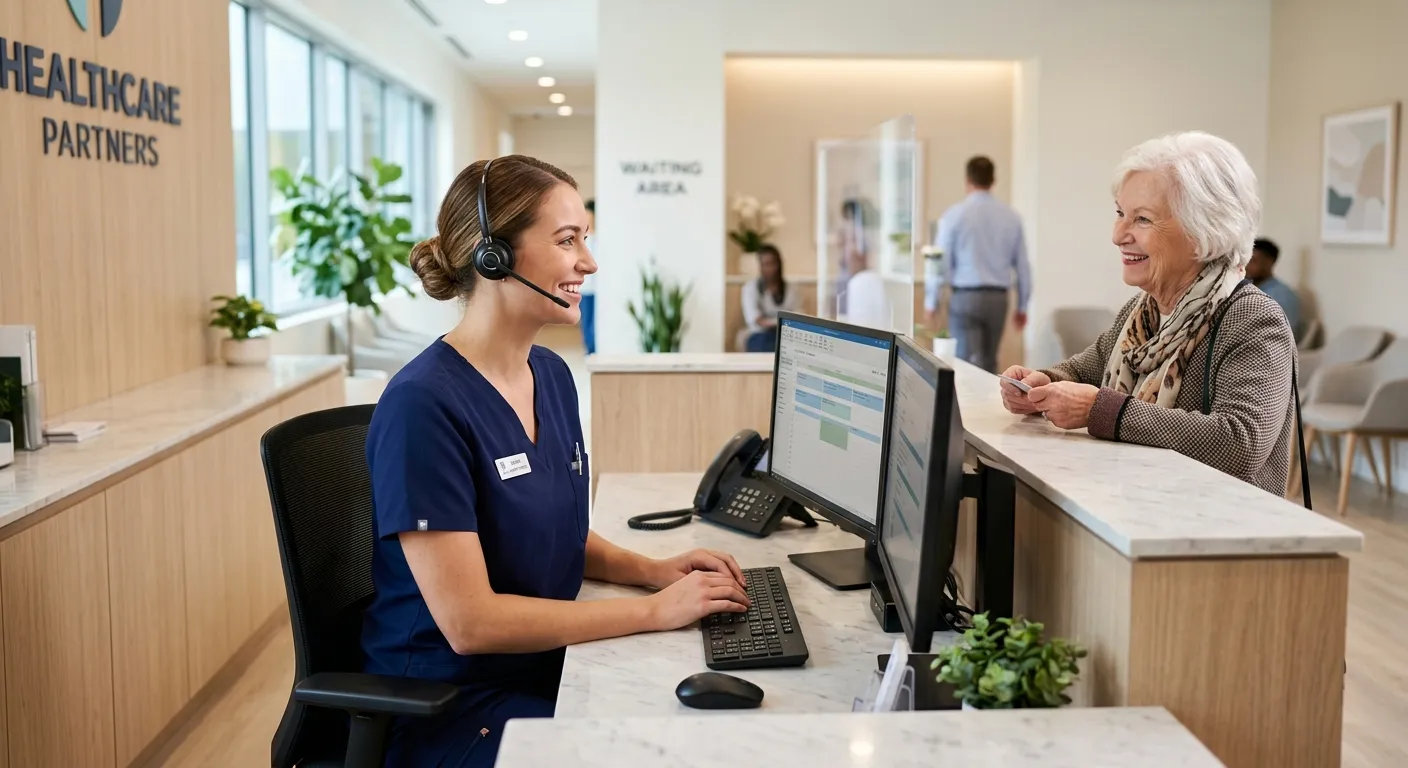
A Medical Front Desk Receptionist is far more than an administrative assistant; they are the central nervous system of any clinical practice. They are the first point of human contact, setting the tone for the patient's entire experience. Their responsibilities encompass a complex blend of customer service, logistics, data management, and compliance, requiring a unique individual who can remain calm under pressure while projecting empathy and professionalism.
From managing a high-volume phone system and scheduling intricate appointment matrices to handling sensitive patient information and processing insurance verifications, their role is multifaceted. A top-tier receptionist directly influences patient satisfaction, clinician productivity, and revenue cycle efficiency. Partnering with a specialized healthcare staffing agency is often the most effective way to find candidates who possess this rare combination of soft skills and technical aptitude.
The Non-Negotiable Skill Set
Identifying the right candidate requires looking beyond a resume. The ideal Medical Front Desk Receptionist embodies a specific profile:
- Exceptional Communication: Clear, compassionate, and professional verbal and written skills for interacting with patients, families, and clinical staff.
- Technical & Software Proficiency: Mastery of Electronic Health Records (EHR) systems, practice management software, multi-line phone systems, and standard office suites.
- Organizational Mastery: The ability to juggle multiple tasks—appointments, billing queries, patient check-ins—with impeccable accuracy and attention to detail.
- Empathy & Discretion: Handling sensitive health information and distressed patients with utmost confidentiality and compassion.
- Problem-Solving Under Pressure: De-escalating conflicts, managing last-minute cancellations or emergencies, and finding solutions that satisfy both patient and practice needs.
Driving Practice Success from the Front Line
The strategic value of an expert Medical Front Desk Receptionist is quantifiable. They directly reduce patient wait times and no-show rates through effective scheduling and reminder systems. They ensure accurate data collection, which is critical for billing and preventing costly claim denials. Their friendly, efficient demeanor enhances patient retention and generates positive online reviews, which are vital for practice growth in a competitive market.
Conversely, a poor fit in this role can lead to operational chaos, decreased staff morale, and patient attrition. This makes the hiring process paramount. For insights on building a resilient team, consider our strategic guide on how to optimize hiring for 2026, which outlines forward-thinking talent acquisition strategies applicable to healthcare.
Why Invest in a Specialist Medical Front Desk Receptionist?
Enhanced Patient Experience & Loyalty
A warm, competent first impression builds immediate trust and reduces patient anxiety. Efficient handling of inquiries and logistics creates a seamless journey, fostering long-term loyalty and positive word-of-mouth referrals that are the lifeblood of any practice.
Optimized Clinical Workflow & Revenue
By managing schedules to maximize physician time, ensuring accurate patient data entry, and facilitating smooth billing processes, a skilled receptionist directly boosts practice productivity and financial health. They minimize administrative bottlenecks that can delay care and payments.
Compliance & Risk Mitigation
In an industry governed by strict regulations like HIPAA and GDPR, a trained receptionist is your first line of defense. They ensure patient privacy is protected, consent forms are properly managed, and information handling protocols are followed, shielding your practice from significant legal and financial risks.
Strategic Hiring for Your Medical Front Desk
Finding the perfect Medical Front Desk Receptionist requires a targeted approach. Generic job boards often yield generic candidates. The most effective strategy involves crafting a precise job description that highlights both the technical requirements (EHR experience, billing codes) and the cultural competencies (empathy, teamwork).
Leveraging a specialized healthcare agency like Carer Agency provides access to a pre-vetted talent pool. We understand the nuances of clinical environments, from a busy London GP surgery to a private specialist clinic. Our process goes beyond matching skills; we assess for the resilience and patient-centric attitude required to thrive. Just as we connect businesses with temporary construction workers in Norwich or safety coordinators in Stockport, we apply the same rigorous, sector-specific methodology to healthcare roles.
Pro-Tip: During interviews, use situational questions. Ask"How would you handle a patient who is upset about a long wait time?" or"Walk me through how you would verify a new patient's insurance." The responses reveal problem-solving ability and customer service philosophy far better than a list of previous job duties.
Learn how to secure reliable staff swiftly, a strategy just as vital for a medical practice as for any other business.
Building a Career as a Medical Front Desk Receptionist
From Entry-Level to Administrative Leader
This role is a fantastic entry point into the vast healthcare industry. For the ambitious professional, it offers a clear pathway for advancement. By mastering the front desk, individuals gain a holistic view of practice operations.
Career progression can lead to positions such as:
- Senior Receptionist / Team Lead: Supervising other front office staff and managing complex schedules.
- Medical Office Administrator / Practice Manager: Overseeing the entire non-clinical operation, including HR, budgeting, and compliance.
- Patient Coordinator: Specializing in guiding patients through specific treatment pathways or surgical processes.
- Billing and Coding Specialist: Diving deeper into the financial side of healthcare with specialized certifications.
Continuous learning is key. Pursuing certifications in medical administration, HIPAA compliance, or specific EHR software can significantly boost earning potential and marketability. For those exploring adjacent high-demand fields, understanding the landscape of roles like an AI Chatbot Architect highlights how technology is transforming all sectors, including patient communication in healthcare.
Immediate Opportunities
The demand for skilled receptionists is constant. Whether you seek a permanent role in a specialist clinic or flexible temporary work to gain broad experience, opportunities abound.
Browse Recent Healthcare JobsFind Your Location
Medical receptionist roles are needed everywhere. Explore opportunities across the UK, from major hubs to local communities.
View All LocationsIntegrating Your New Receptionist for Success
Hiring is only the first step. A structured onboarding process is critical for retention and rapid productivity. This should include:
1. Systems & Software Training
Dedicated time with super-users for your specific EHR, phone system, and billing software. Create quick-reference guides.
2. Shadowing & Mentorship
Pair the new hire with your most experienced receptionist or practice manager for at least a week to learn clinic-specific protocols.
Remember, the front desk is a high-stress role. Regularly check in, provide constructive feedback, and recognize their contribution to the team's success. For comprehensive support in building your entire non-clinical team, from receptionists to specialist care staff, a full-service healthcare agency can provide ongoing workforce solutions tailored to your practice's evolving needs.
Frequently Asked Questions: Medical Front Desk Receptionist
The most significant challenge is often managing competing priorities while maintaining composure and empathy. Receptionists must simultaneously handle phone calls, check-in patients, process paperwork, and answer questions—all while patients may be anxious, in pain, or frustrated. Balancing efficiency with compassionate customer service in a fast-paced, sometimes emotionally charged environment requires exceptional multi-tasking and emotional intelligence skills.
A specialized healthcare agency provides three key advantages: Access: They have an existing network of pre-screened, qualified candidates actively seeking healthcare roles, drastically reducing your time-to-hire. Vetting: They perform in-depth interviews, reference checks, and often skills assessments (e.g., software tests, role-playing scenarios) that you may not have time for. Industry Knowledge: They understand the specific compliance needs (like HIPAA/GDPR), the soft skills required for patient-facing roles, and can accurately assess a candidate's fit for your practice's unique culture, much like they would for niche roles such as an Urgent Drone Delivery Manager in a logistics context.
Salaries vary based on location, practice setting (e.g., NHS GP surgery vs. private hospital), experience, and specific responsibilities. In the UK, entry-level positions may start within a national band, while experienced receptionists in London or within specialist private practices can command higher wages. Offering competitive pay, clear progression pathways, and a positive work environment is crucial to attracting and retaining the best talent. For a broader view on compensation and high-demand jobs, you can review insights on the best UK jobs hiring right now.
Absolutely. Temporary staffing is an excellent solution for covering maternity leave, seasonal peaks, sudden staff shortages, or special projects like clinic migrations. A reliable agency can provide vetted temporary receptionists who are quickly onboarded to your systems. This flexibility ensures your practice runs smoothly without interruption, similar to how businesses secure immediate concert staff for event-based needs or expert labour crews for construction projects. It's a strategic way to maintain service quality while you search for a permanent hire or manage fluctuating demand.
Ready to Transform Your Practice's First Impression?
Stop letting administrative bottlenecks slow down your care. Partner with experts who understand the critical role of the Medical Front Desk Receptionist. Hire with confidence, hire for impact.
For immediate staffing needs across other sectors, from expert cleaners to finance assistants, Carer Agency delivers reliable, vetted talent.
Case Study: How a Specialist Receptionist Transformed a Clinic's Efficiency
The Challenge: A London Private Cardiology Practice
A growing cardiology clinic in central London was experiencing severe administrative strain. Patient wait times averaged 25 minutes past appointment slots, the no-show rate had climbed to 18%, and front-desk staff turnover was 70% annually. The practice manager was spending over 15 hours a week resolving scheduling conflicts and billing errors instead of focusing on strategic growth. The chaotic front desk was creating a negative feedback loop: stressed staff provided poor service, leading to frustrated patients and negative reviews, which further demoralized the team.
The clinic initially tried recruiting via general job boards but found candidates lacked the specific combination of medical terminology knowledge, insurance processing skills, and the resilience needed for a fast-paced specialist environment. They needed a candidate who could not only manage the logistics but also provide reassurance to anxious patients undergoing cardiac investigations.
The Solution: Partnering with a healthcare-specialist agency, the clinic defined a precise competency matrix for the role. The agency’s vetting process included a simulated high-pressure phone test with a distressed “patient” and a timed data-entry task using mock EHR software. This identified a candidate with prior experience in a fast-paced NHS outpatient department and a certified course in customer service de-escalation techniques.
The Measurable Outcomes (6-Month Review)
67%
Reduction in Average Wait Time
61%
Drop in Patient No-Shows
92%
Increase in Front Desk Staff Retention
£28k
Estimated Annual Revenue Recovered
The new receptionist implemented a structured patient reminder system (combining SMS, email, and phone calls), reorganized the physical check-in flow, and created a shared digital"clinic notes" system for common patient queries. This empowered the entire admin team, reduced repeat calls to clinicians, and created a calmer, more controlled patient environment. The practice manager regained over 12 hours per week for strategic tasks.
Beyond the Basics: The Rise of the Tech-Enabled Medical Receptionist
The role is rapidly evolving from purely administrative to a hybrid of patient liaison, data steward, and digital workflow optimizer. Tomorrow's top performers will need proficiency in new tools.
Automation & Patient Portals
Modern receptionists are expected to manage and encourage patient use of online portals for appointment booking, form completion, and lab result viewing. This reduces phone volume but requires the receptionist to troubleshoot access issues, educate patients on digital literacy, and ensure data syncs correctly with the EHR. They become champions for digital adoption, directly impacting practice efficiency.
Data Analytics & Reporting
Front-line staff are a goldmine of operational data. A tech-savvy receptionist can generate simple reports from the PMS (Practice Management System) on peak call times, appointment type durations, or common patient request categories. This data empowers managers to make evidence-based decisions on staffing levels, schedule templates, and resource allocation, moving the role from reactive to proactive.
Cybersecurity First Responder
With increased digital handling of PHI (Protected Health Information), receptionists are on the front line of cybersecurity. Training now includes identifying phishing attempts (e.g., suspicious emails requesting patient data), securing workstations, and proper protocols for reporting potential breaches. Their vigilance is a critical component of a clinic's overall security posture.
Future Outlook: As AI-powered tools for appointment scheduling and initial patient triage become more prevalent, the medical receptionist's role will shift towards higher-value tasks: complex patient navigation, empathy-driven communication for delicate situations, and managing exceptions that fall outside automated systems. This underscores the need to hire for adaptability and continuous learning.
Actionable Resources: From Planning to Hire
Sample Interview Scorecard for Medical Receptionists
Move beyond gut feeling. Use a structured scorecard to evaluate candidates consistently and objectively against the core competencies of the role.
How to use it: Create a simple table for each interviewer. Score candidates immediately after the interview while impressions are fresh. Discuss discrepancies in scoring as a hiring team to uncover different perspectives.
30-60-90 Day Onboarding Plan Template
A clear roadmap sets expectations and accelerates time-to-productivity. Here’s a high-level framework to adapt for your practice.
-
First 30 Days: Learning & Foundation
Focus on assimilation. Complete all compliance training, master basic phone and check-in procedures, learn names of key staff and frequent patients, and understand the schedule template. Goal: Handle routine check-ins and calls independently.
-
Days 31-60: Application & Contribution
Begin managing the appointment book for one clinician, process simple billing inquiries, and take ownership of a small administrative task (e.g., managing office supplies, organizing the patient forms library). Goal: Reduce reliance on the mentor by 50%.
-
Days 61-90: Optimization & Initiative
Fully manage the front desk for a full day, identify one process improvement suggestion, and handle a complex patient complaint from start to resolution with oversight. Goal: Achieve full, autonomous competency and contribute to team efficiency.
The right environment, tools, and plan set your new hire—and your practice—up for long-term success.