Emergency Healthcare Staffing Agency: Rapid Clinical Cover for London and Urgent Care Teams
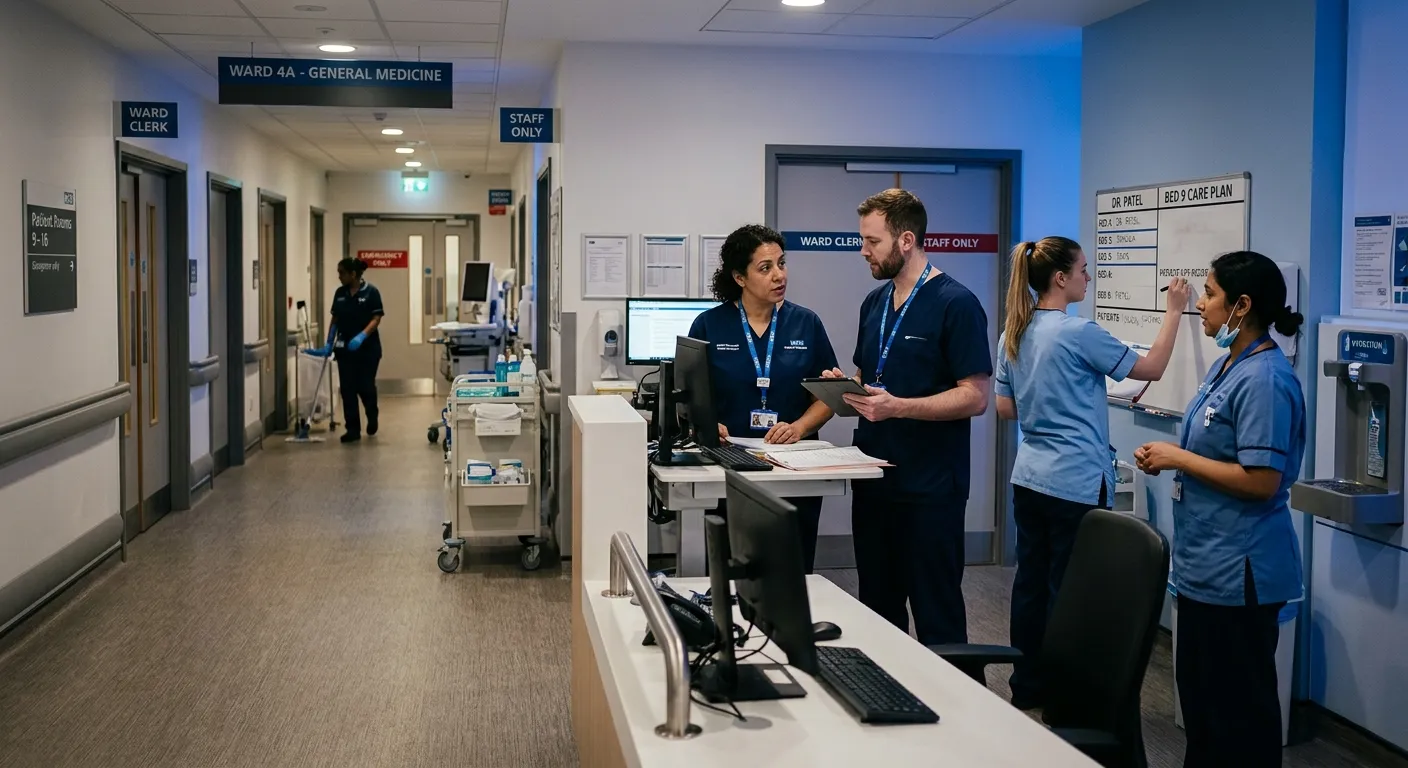
When a ward loses staff, the pressure is immediate. Patients still need care, rotas still need cover, and managers still need dependable people who can step in without compromising safety. An Emergency Healthcare Staffing Agency exists to solve exactly that problem: providing fast, compliant, clinically competent cover when there is no time for a lengthy recruitment process.
Whether you are a hospital, care home, community provider, or outpatient clinic, rapid access to qualified staff can protect patient outcomes, reduce burnout, and keep operations running. Our approach combines local responsiveness with national standards, making it easier to find healthcare staff in London, manage urgent vacancies, and maintain continuity of care.
Hire Staff TodayWhy Emergency Cover Matters
- • Reduces the risk of understaffed shifts and delayed care.
- • Protects permanent teams from excessive overtime and fatigue.
- • Supports compliance, safeguarding, and safe staffing levels.
- • Helps providers respond to seasonal pressure, absence spikes, and unexpected vacancies.
Emergency Healthcare Staffing Agency Overview by Need
Every urgent staffing situation is different. Some teams need cover within hours, while others require a structured plan for recurring vacancies. The tabs below show how an Emergency Healthcare Staffing Agency supports different categories of demand.
Last-Minute Clinical Cover That Arrives Fast
Urgent cover is needed when a nurse, healthcare assistant, or specialist clinician is absent unexpectedly, a shift is unfilled, or patient demand rises without warning. The priority is speed, but speed cannot replace competence.
- Same-day and next-day shift cover for acute, community, and care settings.
- Access to clinicians familiar with ward routines, medication safety, and handover procedures.
- Support for high-pressure periods such as winter surges, flu outbreaks, and staffing shortages.
- Escalation options if initial candidates are unavailable, keeping vacancy risk low.
Flexible Temporary Staffing for Changing Demand
Temporary staffing is not only for emergencies. It can also support planned leave, service changes, pilot programmes, and seasonal peaks. A reliable agency can help you scale up or down without committing to permanent headcount too early.
- Day, night, weekend, and block shift availability.
- Short-term cover for maternity, sickness, or training absence.
- Long-term temporary placements that provide continuity for patients and staff.
- Hybrid models combining ad hoc cover with regular framework staffing.
Compliance That Protects Patients and Employers
In healthcare, compliance is not an administrative extra. It is part of clinical safety. An Emergency Healthcare Staffing Agency must verify identity, professional registration, right to work, training, and suitability before anyone steps onto a shift.
- Right-to-work checks and identity verification.
- DBS checks where appropriate for roles involving vulnerable adults or children.
- Professional registration validation, including NMC or other relevant bodies.
- Competency assessment, mandatory training review, and induction documentation.
Workforce Planning Beyond the Immediate Shift
The strongest emergency staffing partners do not simply fill gaps. They help you understand why gaps are happening and how to reduce them over time. That includes forecasting demand, building talent pools, and creating contingency plans.
- Temp-to-perm pathways for proven staff who are a good cultural fit.
- Framework agreements for predictable cover across multiple sites.
- Reporting on vacancy trends, fill rates, and agency performance.
- Support for recruitment strategy aligned with modern healthcare workforce solutions.
Key Benefits of an Emergency Healthcare Staffing Agency
A strong agency partner delivers more than names on a rota. The following benefits show why healthcare organisations increasingly rely on specialist staffing support during both urgent and planned periods.
Rapid Response
When vacancies appear suddenly, time is critical. An emergency agency can shortlist qualified staff quickly and present candidates who are ready to work.
Vetted Clinicians
Patient safety depends on competence. Every placement should be supported by verified credentials, references, and role-specific suitability checks.
London Coverage
Local knowledge matters. Providers in London benefit from agencies that understand transport, boroughs, care settings, and regional workforce patterns.
Compliance Assurance
Proper checks reduce legal, reputational, and clinical risk. A trusted agency helps maintain audit-ready documentation across every assignment.
Continuity of Care
Frequent handovers can disrupt care. Long-term temporary staff can support stable routines, better patient relationships, and smoother team integration.
Cost Control
Compared with unmanaged overtime and rushed hiring, planned agency cover can improve budget visibility while reducing the hidden cost of staff burnout.
About Our Emergency Healthcare Staffing Agency
We support healthcare organisations that need dependable clinical staffing at speed. That includes hospitals, care homes, community services, rehabilitation units, outpatient clinics, and specialist providers. Our role is not simply to send staff; it is to provide a safe, responsive, and well-governed workforce solution when pressure is highest.
As an Emergency Healthcare Staffing Agency, we focus on three priorities: speed, suitability, and safety. A candidate may be available quickly, but if they are not appropriately experienced or compliant, the placement is not truly successful. We therefore combine rapid sourcing with structured credential checks and clear communication with hiring managers.
For organisations searching for Pulse Nursing Agency London options, local insight can be decisive. London is a complex healthcare market, with multiple boroughs, diverse clinical settings, and highly variable demand patterns. A strong agency partner understands where staff can realistically travel, which skills are most in demand, and how to maintain cover across both urban and suburban sites.
Explore healthcare staffing servicesPro Tip: Build a Pre-Approved Talent Pool
The fastest way to reduce emergency staffing pressure is not to wait until a crisis begins. Healthcare providers should maintain a small, pre-approved pool of agency staff who have already completed compliance checks, induction, and role-specific competency review.
- Shortlist staff before winter pressure begins.
- Use framework agreements to improve response times.
- Track preferred candidates by ward, unit, or specialty.
- Review fill rates monthly to identify recurring gaps.
When an Emergency Healthcare Staffing Agency Becomes Essential
There are predictable times when healthcare demand rises, and there are moments when staffing fails without warning. An Emergency Healthcare Staffing Agency becomes essential when internal resources are no longer enough to maintain safe, consistent care.
- Sudden absence: A nurse, team leader, or specialist clinician calls in sick and no bank staff are available.
- Winter pressure: Patient volumes rise sharply while staff are fatigued, isolating, or redeployed.
- Long-term vacancies: A permanent role remains unfilled while service demand continues.
- Maternity or sickness leave: Cover is needed for weeks or months, not just a single shift.
- Service expansion: A new ward, clinic, or care pathway requires immediate staffing support.
- Incident response: Outbreaks, safeguarding concerns, or operational disruption demand rapid reinforcement.
In each of these situations, the goal is the same: protect patient care while preventing permanent staff from absorbing unsustainable pressure. Agencies can also support managers with staff recruitment in London when temporary cover needs to convert into longer-term stability.
How Rapid Emergency Healthcare Staffing Works
A structured process is what separates fast staffing from rushed staffing. The best emergency agencies do not simply advertise a shift and hope for the best. They run a controlled workflow that balances speed with suitability.
- 1. Vacancy intake: Managers confirm the role, shift pattern, required skills, and clinical environment.
- 2. Candidate shortlisting: The agency searches available staff who meet both competency and availability criteria.
- 3. Compliance verification: Right-to-work, registration, training, and safeguarding checks are confirmed or reviewed.
- 4. Offer and acceptance: The selected candidate is briefed, and the placement is formally confirmed.
- 5. Shift support: The agency stays available if there are late changes, travel issues, or escalation needs.
- 6. Feedback loop: Managers report on performance so future placements improve.
Watch: Healthcare Staffing Guide
For managers building a stronger contingency plan, this video explains how healthcare staffing works in practice and what to consider when choosing a reliable partner.
If you want to see current opportunities or understand where demand is highest, you can also review recent jobs for context on fast-moving healthcare vacancies.
Clinical Roles an Emergency Healthcare Staffing Agency Can Supply
Emergency cover is not one-size-fits-all. Different services require different skills, and a good agency understands that a replacement healthcare assistant is not the same as a specialist nurse or therapy professional. Common roles include:
Registered Nurses
Acute, community, mental health, paediatric, and specialist nursing cover.
Healthcare Assistants
Support staff for personal care, observations, and ward routines.
Mental Health Staff
Clinicians and support workers for psychiatric, crisis, and community settings.
Therapy Professionals
Occupational therapy and physiotherapy cover for rehabilitation services.
Diagnostic Support
Radiographers, phlebotomists, and imaging-related support roles.
Care Home Teams
Senior carers, nurses, and support staff for residential and nursing homes.
For specialist placements, it helps to work with an agency that understands both clinical governance and local demand. Providers can compare options through healthcare staffing in London to identify roles, regions, and workforce availability.
Compliance, Safeguarding, and Clinical Governance
In emergency healthcare staffing, compliance is not a back-office function. It is a patient safety measure. A rushed placement without proper checks can create serious risk, especially when staff are unfamiliar with the environment, medication protocols, or safeguarding expectations.
A professional Emergency Healthcare Staffing Agency should have clear processes for identity verification, professional registration checks, mandatory training, competency assessment, and right-to-work confirmation. Where roles involve children or vulnerable adults, DBS checks and safeguarding awareness are essential.
Documentation should also be audit-ready. That means the employer can demonstrate that every staff member sent to a shift was properly screened, briefed, and suitable for the role. This is particularly important in regulated healthcare settings where inspection and commissioning bodies may review staffing practices.
Expert Insight
Always ask your agency how compliance is maintained between shifts. A staff member who was cleared last month may still require updated training, registration checks, or competency confirmation before returning to a different service.
- Updated professional registration
- Valid mandatory training
- Role-specific competency evidence
- Clear induction and handover records
Pulse Nursing Agency London: Local Insight, National Standards
London’s healthcare landscape is large, varied, and highly competitive. Staff may travel across boroughs, but realistic deployment depends on location, transport links, shift timing, and role suitability. That is why organisations looking for Pulse Nursing Agency London support should prioritise partners with strong local knowledge and a responsive recruitment process.
A local agency advantage is not just geography. It is about understanding which sites are under pressure, which specialties are hardest to fill, and how to build reliable relationships with clinicians who want to work in the area. For emergency cover, those relationships matter because they influence speed, reliability, and retention.
If you need support across multiple locations, it can help to review the locations you can access and understand where your staffing challenges are most concentrated. A good agency will use that insight to build a more resilient workforce plan rather than simply reacting to each vacancy individually.
Managing Cost, Risk, and Continuity
Emergency staffing is often viewed through the lens of short-term cost, but the real financial impact is broader. Understaffed shifts can lead to longer patient stays, poorer outcomes, increased complaints, and higher permanent staff turnover. Those consequences are often far more expensive than planned agency cover.
A professional agency can also support better budget control by offering predictable rates, framework agreements, and clearer reporting. Instead of scrambling for last-minute cover at premium rates, organisations can plan for recurring demand and reduce the hidden costs of operational disruption.
Continuity is another important factor. Where possible, long-term temporary placements can reduce the number of unfamiliar staff entering a service. That improves handover quality, strengthens team confidence, and supports better patient experience.
The Hidden Costs of Poor Cover
- •Increased overtime for permanent staff
- •Higher sickness absence and burnout
- •Reduced patient safety and satisfaction
- •Compliance and audit exposure
- •Managerial time lost to urgent firefighting
How to Choose the Right Emergency Healthcare Staffing Agency
Not all agencies are equal. Some can fill shifts, but not all can do so safely, quickly, and consistently. When evaluating a partner, look beyond availability rates and consider governance, communication, and long-term support.
Key Questions to Ask
- How fast can you provide confirmed staff?
- What compliance checks are completed before placement?
- Do you have experience in our specialty or service type?
- Can you support both ad hoc and framework cover?
- How do you handle late cancellations or no-shows?
What Good Practice Looks Like
- Clear communication with hiring managers
- Transparent rates and no hidden charges
- Consistent staff who understand local protocols
- Strong reporting on fill rates and feedback
- A long-term view of workforce resilience
If your organisation is planning ahead, it can also be useful to compare temporary staffing models with permanent recruitment through resources such as optimize hiring for 2026. The best agencies help you decide when to use cover, when to convert to permanent roles, and how to build a more stable workforce over time.
Frequently Asked Questions About Emergency Healthcare Staffing Agencies
Hire Emergency Healthcare Staff Today
If your team is facing urgent vacancies, rising demand, or last-minute absence, do not wait until patient safety is at risk. A professional Emergency Healthcare Staffing Agency can help you access qualified, compliant staff quickly while reducing operational pressure. Whether you need one shift, long-term cover, or support across London, the right partner can make the difference between disruption and stability.
Post Your Vacancy NowPrefer to explore first? Review healthcare worker hiring resources and compare staffing options for urgent clinical cover.